

Tick Fever in Dogs: Symptoms, Blood Tests and Treatment in Pune
Ehrlichia and Babesia from the brown dog tick are the commonest serious infections we diagnose in PCMC dogs. The signs, the blood tests that confirm it, and how long treatment takes.
· 5 min read
Updated
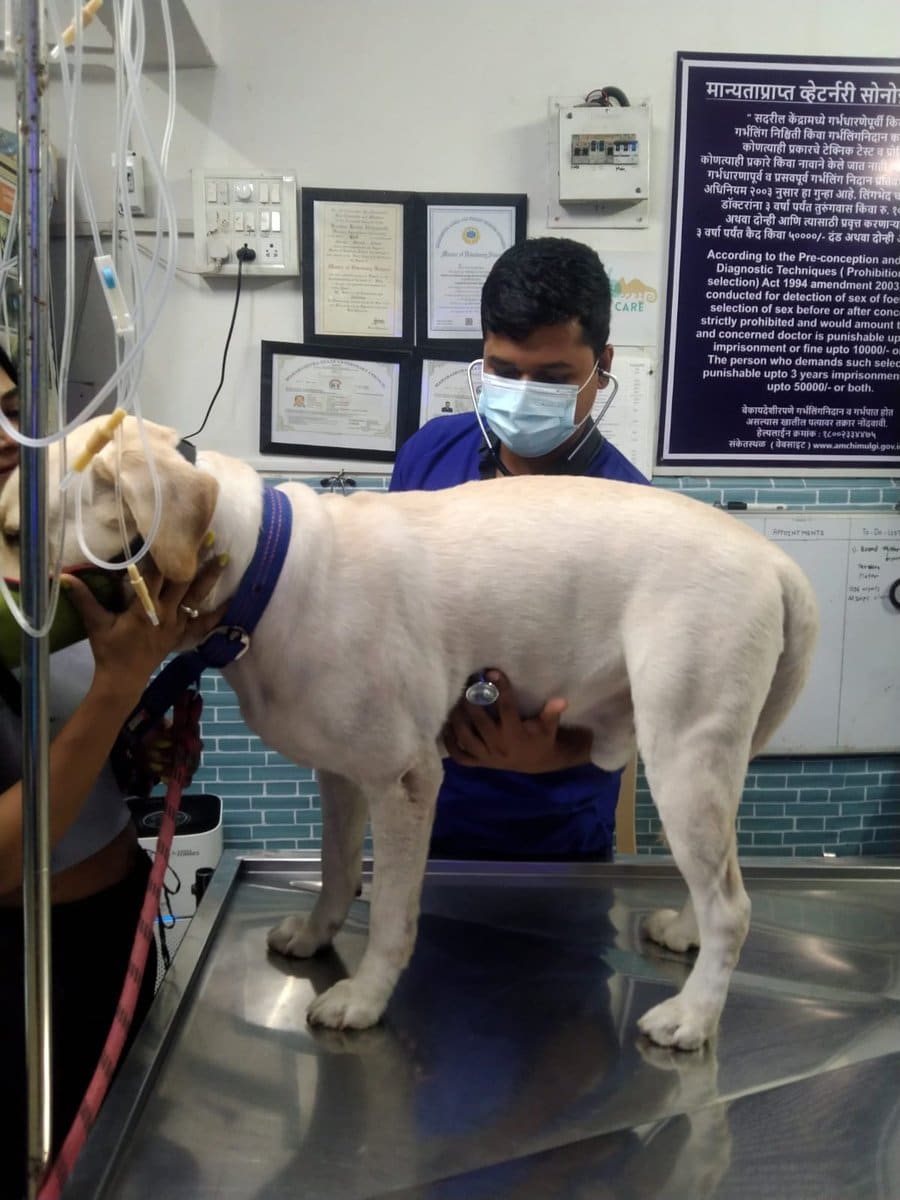
"Tick fever" is not one disease. It is the everyday name for several blood infections spread by ticks, and in Pune and PCMC two of them do most of the damage: Ehrlichia canis and Babesia (mainly B. gibsoni and B. vogeli). Both are carried by the brown dog tick, Rhipicephalus sanguineus. This tick lives happily in apartment stairwells, parking basements and society gardens, not only in long grass.
That is why we see tick fever in dogs who "never go anywhere". One walk through a society compound shared with community dogs is enough exposure.
How the two main infections differ
| Ehrlichiosis | Babesiosis | |
|---|---|---|
| Organism | Bacterium living inside white blood cells | Parasite living inside red blood cells |
| Typical early sign | Fever, dullness, low appetite | Sudden weakness, pale gums |
| Classic warning sign | Nosebleeds, bruising on the belly, bleeding gums | Dark brown or red urine, yellow gums |
| Main lab finding | Very low platelets | Anaemia; parasites seen on a blood smear |
| Course | Can go quiet for months and return as chronic disease | Often acute and fast |
Many dogs carry more than one infection at the same time, and that changes the treatment plan.
Signs pet parents usually notice first
- Your dog is quiet and not interested in food for a day or two, often in the monsoon or just after it.
- A warm, dry nose and hot ears, with a rectal temperature above 39.5 °C (normal is roughly 38.0–39.2 °C).
- Pale pink or white gums instead of a healthy salmon pink.
- Small red spots or bruises on the belly or inner ears, or a nosebleed with no injury.
- Red, brown or "cola-coloured" urine.
- Stiff walking, swollen eyelids or cloudy eyes in longer-standing Ehrlichia cases.
How we confirm it
You cannot tell tick fever from a typical viral fever by looking at the dog, and a "fever injection" given without testing often hides the problem for a few days while the platelet count keeps falling.
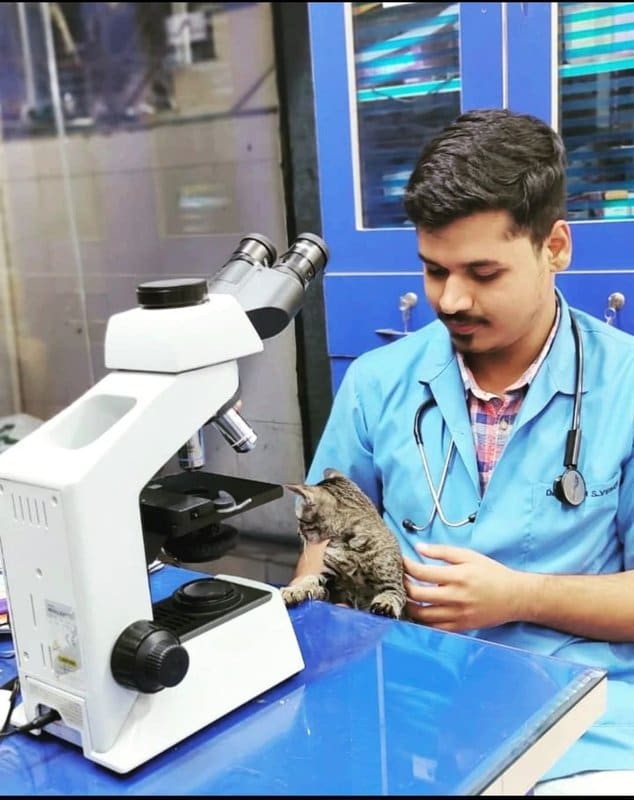
At our clinic the first step is a complete blood count (CBC) in our in-house lab. The result is ready in about 15–20 minutes, during the same visit. A platelet count that has dropped sharply, together with anaemia, points strongly to a tick-borne infection. We then examine a stained blood smear under the microscope, because Babesia can often be seen directly inside red blood cells. If the smear is negative but the CBC is suspicious, we may advise a rapid antibody kit or a PCR test, which is sent to an outside laboratory. Biochemistry (liver and kidney values) tells us how hard the infection has hit the organs. That matters for drug choice and for how closely we need to follow up.
Treatment and how long it takes
- Ehrlichia is treated with a full course of an antibiotic, usually doxycycline, for around four weeks. Most dogs feel better within 2–3 days. The danger is stopping early because the dog "looks fine": partial treatment is a common reason for chronic, relapsing Ehrlichia.
- Babesia is treated with specific anti-protozoal drugs. Which one depends on the species involved, so the smear and history matter. Severe anaemia may need fluids and a blood transfusion first.
- We repeat the CBC during and after treatment. Platelets returning to normal is how we know the infection is controlled, not just that the fever has gone.
Please do not give paracetamol, nimesulide or other human fever medicines at home. They can damage the liver and kidneys of a dog that is already anaemic.
Prevention that actually works in Pune
- Year-round tick control. Ticks breed through Pune's mild winter too, not only in the monsoon. Use a vet-recommended spot-on, collar or oral tablet without gaps between doses.
- Check after every walk: between the toes, inside the ears, under the collar and in the armpits. Pull ticks out with a tick hook or fine tweezers close to the skin, not with your fingers.
- Treat the home if you find ticks indoors. Brown dog ticks lay eggs in wall cracks and behind furniture.
- Test after a tick episode. A routine CBC in dogs with frequent tick exposure can catch low platelets before symptoms appear.
Frequently Asked Questions
Can my dog get tick fever again after treatment?
Yes. Recovery does not give lasting immunity, and a dog can be re-infected by new ticks. Prevention has to continue after treatment.
Can humans catch tick fever from a dog?
Not directly from the dog. The canine forms of Ehrlichia and Babesia seen here are spread by ticks, so controlling ticks on the dog and in the house is what protects the family.
My dog's fever went down after one injection. Is that enough?
No. Fever often settles temporarily while the infection continues. Only a blood test, and a repeat CBC later, can confirm the platelets and red cells are recovering.
How much does testing cost?
Consultation is ₹300. The cost of the CBC and any further tests depends on what is needed, and we tell you before running them.
Keep reading