

Bad Breath in Dogs: When Is It a Sign of Dental Disease?
Dog breath should not make you turn away. Persistent bad breath is usually periodontal disease, and sometimes kidney disease or a mouth tumour. A 2-minute home check, and what professional scaling involves.
· 3 min read
Updated
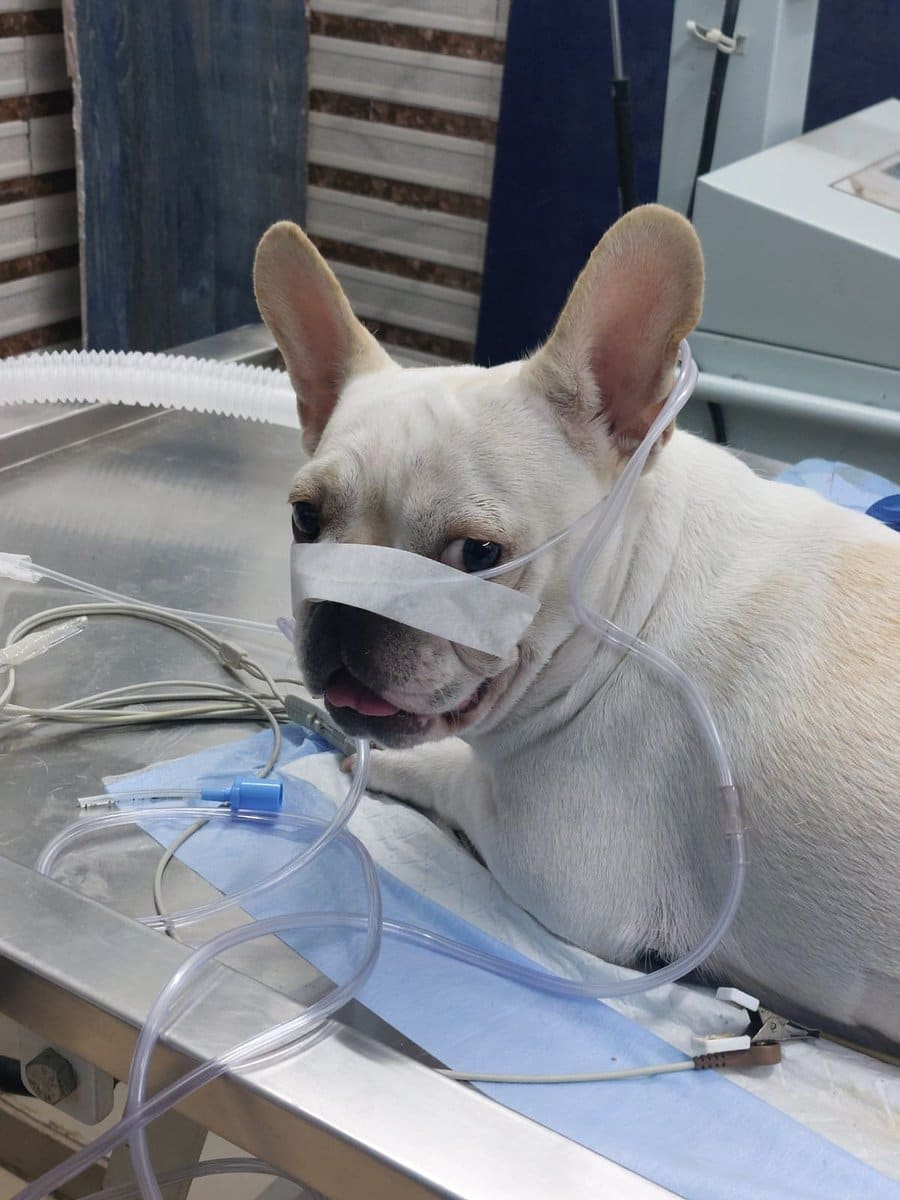
"Doggy breath" is not normal. A healthy dog's mouth has a mild smell. If you notice the smell from across the sofa, or your dog's breath has suddenly changed, something is happening in the mouth, or occasionally elsewhere in the body.
By the age of three, most dogs have some degree of periodontal disease: infection and inflammation of the gums and the structures holding the teeth. Small breeds such as Pomeranians, Shih Tzus, Lhasa Apsos, Pugs and Dachshunds are affected earlier and more severely, because their teeth are crowded into small jaws.
A two-minute check at home
Lift your dog's upper lip at the side, in good light, and look at the back teeth (the large upper premolar is the best indicator):
- Healthy: white teeth, pink gums with a sharp edge where they meet the tooth.
- Early disease: yellow-brown plaque at the gum line, a thin red line along the gum edge.
- Moderate: hard brown tartar covering part of the tooth, swollen red gums that bleed easily.
- Advanced: gums pulling back from the roots, loose teeth, pus, a very foul smell.
Other signs: chewing on one side, dropping food, pawing at the face, reluctance to chew hard treats, or swelling under one eye. That last one can be a tooth-root abscess from the upper carnassial tooth.
When bad breath is not about the teeth
- Ammonia or urine-like smell: can point to kidney disease. We check kidney values with a blood test.
- Sweet or fruity smell: may suggest diabetes with ketones. This is urgent if your dog is also drinking a lot, vomiting or lethargic.
- Sudden very foul smell with bleeding: possible oral tumour, a foreign body stuck in the mouth (bones and sticks get wedged across the palate), or a broken tooth.
What professional dental scaling involves
Tartar cannot be brushed off once it has hardened, and most of the damage is below the gum line, where you cannot see it.
- Pre-anaesthetic blood tests (CBC, kidney and liver values) in our in-house lab, to make anaesthesia as safe as possible.
- Anaesthesia. Proper cleaning under the gum line is not possible on an awake dog. "Anaesthesia-free" scaling only polishes the visible surface and leaves the infection underneath.
- Ultrasonic scaling above and below the gum line, then polishing to smooth the surface so plaque sticks less.
- Examination of every tooth. Teeth that are badly loose, infected at the root or broken may need extraction. We will discuss this with you.
- Same-day discharge in most cases, with soft food for a few days and pain relief if teeth were removed.
Keeping the mouth healthy afterwards
- Daily brushing with a dog toothpaste (never human toothpaste, which may contain xylitol or fluoride). Even 3–4 times a week helps.
- Dental chews sized correctly for your dog, used under supervision.
- Avoid cooked bones and hard objects (antlers, hard nylon, stones). They fracture teeth.
- Check-up every 6–12 months, more often for small breeds.
Frequently Asked Questions
Is anaesthesia safe for an older dog's dental cleaning?
With pre-anaesthetic blood work, careful monitoring and gaseous anaesthesia, the risk is low for most dogs. Leaving a mouth full of infection is the bigger risk, because bacteria from diseased gums affect the heart, liver and kidneys.
My dog still eats well. Can dental disease really be painful?
Yes. Dogs continue to eat through considerable dental pain. Many owners tell us their dog seems "younger" and more playful after diseased teeth are treated.
How often does a dog need professional scaling?
It varies from every year for small breeds with crowded teeth to every few years for large dogs with good home care.
Keep reading