

Blood in Dog Stool: Causes and When It Needs Immediate Care
Bright red streaks after a dietary slip-up are very different from dark, tarry stool or raspberry-jam diarrhoea. How to describe what you see, which signs point to parvo or bleeding disorders, and what we test for.
· 3 min read
Updated
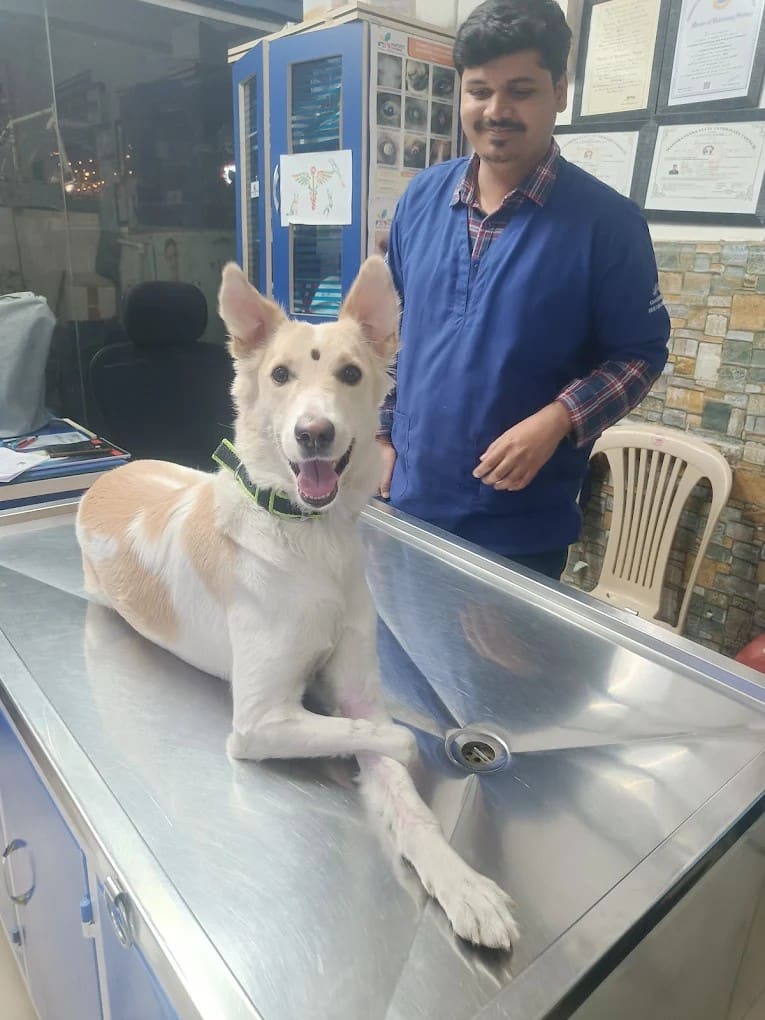
Seeing blood in your dog's stool is alarming, but the colour and pattern tell us a lot about where it is coming from and how urgent it is. Before you clean up, take a photo. It is one of the most useful things you can bring to the vet.
Read the colour
Bright red blood (haematochezia) comes from the large intestine or rectum.
- Streaks on the outside of a normal or soft stool, or a few drops at the end.
- Often with mucus (a jelly-like coating) and straining.
- Common causes: colitis after eating something unusual (street food, garbage, a sudden diet change), stress, whipworms, and anal gland problems.
Dark, black, tarry stool (melaena) comes from higher up: the stomach or small intestine. The blood has been digested.
- Sticky, shiny black stool with a strong smell.
- Causes: stomach ulcers (often from human painkillers like ibuprofen or diclofenac, or a dog NSAID with steroids), swallowed blood, tumours, and severe infections.
- Always needs a vet visit the same day.
"Raspberry jam" diarrhoea: large amounts of watery, red, foul-smelling diarrhoea, often with vomiting. Seen with parvovirus in puppies and with acute haemorrhagic diarrhoea syndrome (AHDS) in small breeds. Both can cause dangerous dehydration within hours.
Signs that make it urgent
Common causes we see in Pune dogs
- Dietary indiscretion: garbage, leftover biryani, bones, festival sweets, and grass and plastic on walks.
- Parasites: hookworms (which also cause anaemia), whipworms, coccidia and Giardia, especially in puppies and rescue dogs.
- Parvovirus in unvaccinated or incompletely vaccinated puppies.
- Tick fever: low platelets from Ehrlichia can cause bleeding from the gut as well as the nose.
- Stress colitis after boarding, travel, or Diwali fireworks.
- Medicine side effects: NSAIDs, steroids, or human painkillers given at home.
- Foreign objects: sharp bone pieces, sticks or toys scraping the gut.
- Anal gland abscess, or polyps and tumours in older dogs.
What we check
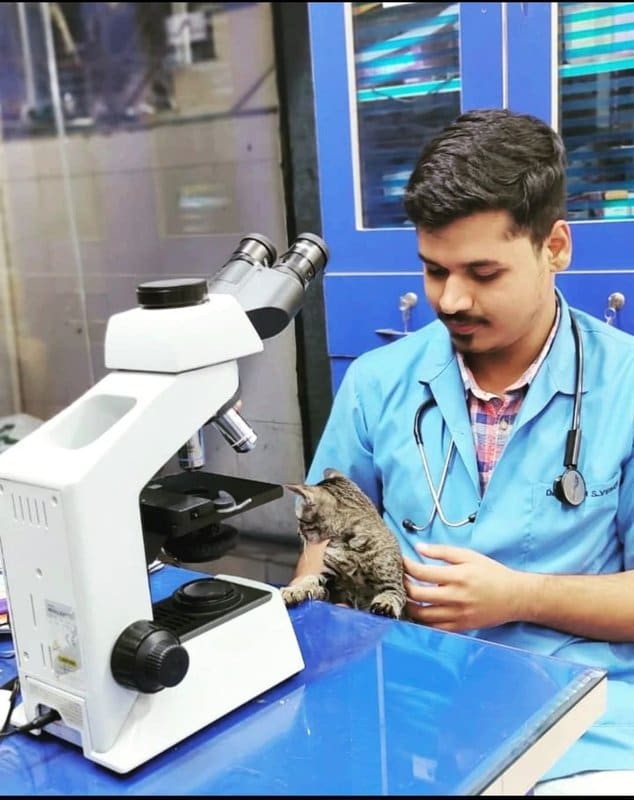
- Faecal microscopy in our in-house lab for worms, coccidia and Giardia.
- Parvovirus rapid test for puppies and unvaccinated dogs.
- CBC (about 15–20 minutes) for anaemia, infection and platelet count, and biochemistry for dehydration and organ involvement.
- Digital X-ray if we suspect a foreign object or an abdominal problem.
- A rectal examination for anal gland problems and masses.
At home, for a mild case
If your adult dog is bright, eating, not vomiting, and has only small streaks of red blood after a known diet slip-up, call us for advice. A short bland-diet plan may be enough. But don't give human anti-diarrhoea medicines, painkillers or antibiotics left over from a previous illness. If it isn't better within 24–48 hours, or gets worse, bring your dog in.
Frequently Asked Questions
Is a little blood after a hard stool normal?
A tiny streak after straining can come from irritation, but it isn't "normal". If it happens more than once, get it checked.
Can stress really cause bloody diarrhoea?
Yes. Stress colitis is common after boarding, travel or firecracker nights, and usually settles with treatment. Rule out other causes first.
My puppy is vaccinated. Can it still be parvo?
If the vaccine course isn't complete (the last puppy dose around 16 weeks), protection may not be full. Test any puppy with bloody diarrhoea.
Keep reading