

Cat Diarrhoea: Common Causes and When to Visit a Vet
One soft stool after a food change is different from diarrhoea with vomiting in a kitten. The common causes in Indian homes (milk, diet switches, worms, panleukopenia), what to try at home, and when it can't wait.
· 3 min read
Updated
Diarrhoea is one of the most common reasons cats visit us. Many cases are short-lived and caused by a diet slip, but diarrhoea in kittens and in cats who are also vomiting or not eating can become serious quickly, because small bodies dehydrate fast.
Come in the same day if
Common causes
Food-related (most common)
- Milk and dairy: many adult cats are lactose intolerant, so a saucer of milk often leads to diarrhoea.
- Sudden diet change: switching food brands overnight. Change over 7–10 days instead.
- Table scraps: gravy, fried fish, festival sweets, chicken skin.
- Spoiled food left out in Pune's warm months.
Parasites: roundworms, hookworms, coccidia and Giardia, especially in rescued kittens and cats from multi-cat homes. Routine dewormers don't treat coccidia or Giardia.
Infections: feline panleukopenia (parvovirus), and bacterial infections from contaminated food.
Stress: moving house, a new pet, boarding, or Diwali fireworks can trigger short-lived "stress colitis" with mucus and a little fresh blood.
Chronic problems in adult and older cats: inflammatory bowel disease, food allergy, hyperthyroidism (with weight loss and a big appetite), pancreatitis, and intestinal lymphoma in older cats.
What you can do at home for a mild case
For an adult cat that is bright, eating and not vomiting:
- Make sure fresh water is always available. Add water to wet food.
- Stop milk, treats and table food.
- Offer small, frequent meals of its normal food, or a bland option we recommend (for example, plain boiled chicken) for a day or two.
- Don't give human anti-diarrhoea medicines, antibiotics from home, or ORS made for people without asking us first.
If there's no improvement in 24–48 hours, or things get worse, bring your cat in.
What we check
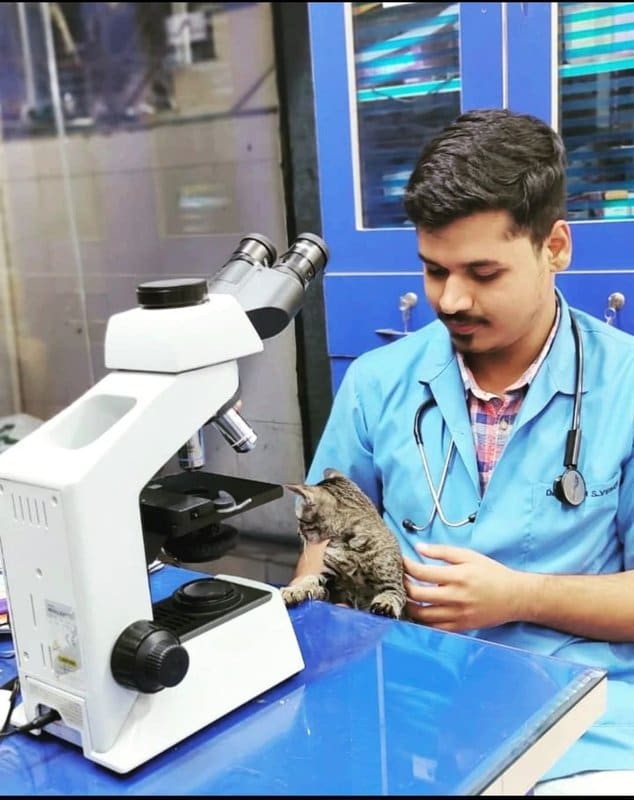
- Faecal examination under the microscope in our in-house lab: worms, coccidia, Giardia.
- Panleukopenia rapid test for kittens and unvaccinated cats.
- CBC and biochemistry (about 15–20 minutes) for dehydration, infection and organ function.
- Thyroid test (sent to an external lab) for cats over 8 with weight loss.
- X-ray if we suspect a foreign body or an abdominal problem.
Bring a fresh stool sample (less than a few hours old) in a clean, sealed container. It saves time.
Frequently Asked Questions
Should I stop food completely for a day?
Not for cats. Unlike dogs, cats should not be starved. A cat that goes without food for a long time, especially an overweight one, risks fatty liver disease. Offer small, bland meals.
Can probiotics help?
Some pet-specific probiotics can help. Human probiotic products may not contain the right strains or doses. Ask us which one to use.
My kitten keeps getting diarrhoea after deworming. What's wrong?
Coccidia and Giardia often need specific medicine. A stool test will tell us.
Keep reading