

Blood in Cat Urine: Cystitis, Urinary Blockage and When It's an Emergency
A male cat straining in the litter box with little or no urine can die within 24–72 hours. How to tell a blockage from cystitis, the common causes of bloody urine in cats, and what treatment involves.
· 3 min read
Updated
Blood in a cat's urine usually comes from inflammation of the bladder, a group of problems vets call FLUTD (feline lower urinary tract disease). Most cases are painful but not immediately life-threatening. One situation is different: a cat, almost always a male, whose urethra is blocked and who cannot pass urine at all.
First, rule out a blockage
Owners often mistake straining to urinate for constipation. If you can't be certain urine is coming out, treat it as a blockage.
Check the litter: are there normal-sized clumps? A male cat producing only small spots, or wet patches with blood, needs to be seen the same day.
Common causes of blood in the urine
Idiopathic cystitis (FIC): the most common cause in young and middle-aged cats. There's no infection. It is bladder inflammation closely linked to stress: a new pet, moving house, visitors, Diwali crackers, construction noise, a dirty or shared litter box, or a change in routine. It tends to come back in episodes.
Urinary crystals and stones: struvite and calcium oxalate. Crystals can form a sandy "plug" that blocks the narrow male urethra. Diet and low water intake play a big role.
Bacterial infection: less common in young cats than people assume, but more common in older cats, especially those with kidney disease or diabetes.
Less common causes: bladder tumours in older cats, trauma (a fall from a balcony), and clotting problems from rat poison.
What we do at the clinic
- Gentle abdominal palpation. A blocked bladder is large, hard and painful.
- Urinalysis in our in-house lab, to look for blood, crystals, bacteria and urine concentration.
- Blood tests (biochemistry and electrolytes) in about 15–20 minutes if the cat is blocked or unwell, to check kidney values and the dangerous potassium level.
- Digital X-ray to look for stones in the bladder or urethra.
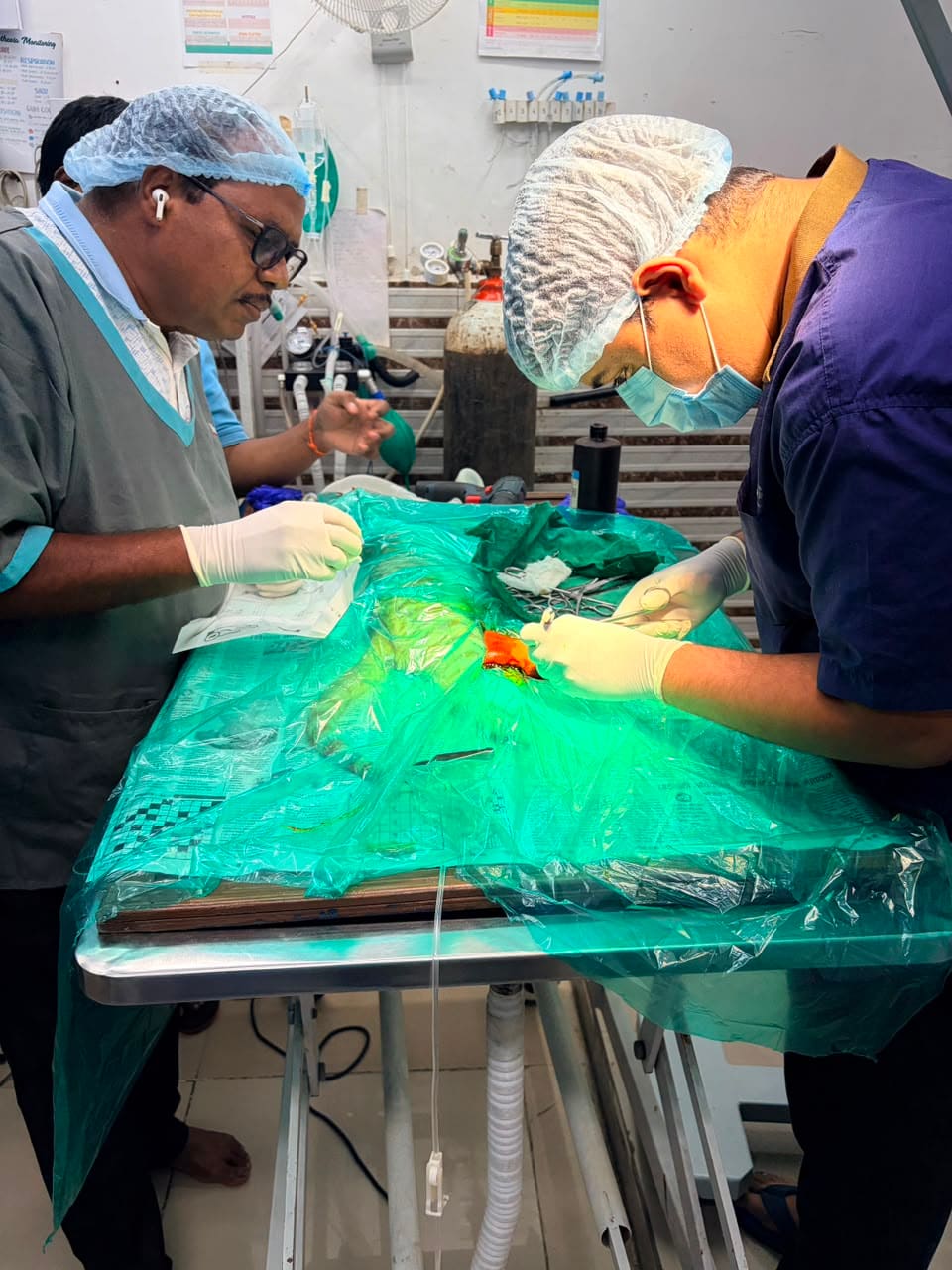
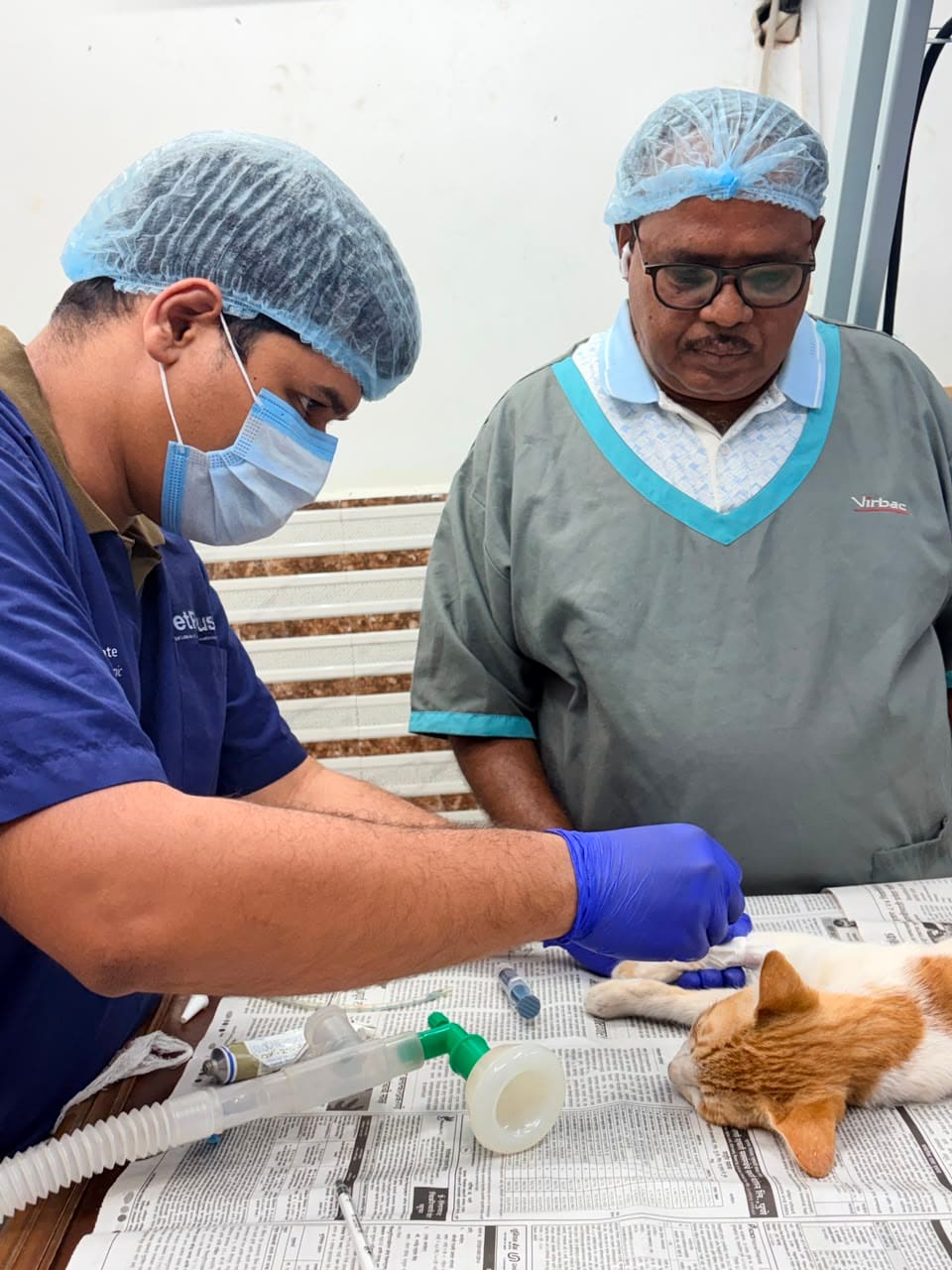
If the cat is blocked, we stabilise it first (fluids, pain relief, correcting potassium), then relieve the blockage under sedation or anaesthesia with a urinary catheter. Most cats need hospital care with the catheter in place for a period afterwards. Cats that block repeatedly despite diet change may need a surgery called perineal urethrostomy.
If not blocked, treatment is pain relief, anti-inflammatories, more water and stress reduction. Antibiotics are used only when infection is confirmed.
Preventing repeat episodes
- More water. Wet food is the biggest single change. Add water to wet food, use a water fountain, and keep several bowls away from the food.
- Prescription urinary diet when crystals or stones were found. It only works if it is the only food. No mixing with other foods.
- Litter boxes: one per cat plus one, scooped twice daily, in quiet places. Many indoor flat cats hold urine because the box is dirty or in a noisy spot.
- Lower stress: hiding places, high shelves, play sessions, and a calm, predictable routine. Plan ahead for Diwali.
- Weight control. Overweight, inactive indoor males are at the highest risk.
Frequently Asked Questions
Do female cats get blocked?
Very rarely, because their urethra is wider. Females still get cystitis and need treatment for pain and bloody urine.
Will my cat need a lifelong special diet?
If stones or recurring crystals were found, usually yes, or at least long-term. For stress-related cystitis, more water and less stress may be enough.
Can I give my cat cranberry or a painkiller from home?
No. Human painkillers, especially paracetamol, are deadly to cats, and cranberry doesn't treat feline cystitis.
Keep reading