

Cat Dental Disease: The Signs Pet Parents Often Miss
Cats keep eating through serious tooth pain. The subtle signs of resorptive lesions and gingivostomatitis, how to look inside your cat's mouth safely, and why dental X-rays and anaesthesia are part of proper treatment.
· 3 min read
Updated
Cats with painful mouths rarely stop eating completely. They adapt by swallowing kibble whole, chewing on one side, or eating more slowly. Most cats with dental disease look "fine" to their families until the problem is advanced.
Signs that are easy to miss
- Chewing on one side, or tilting the head while eating
- Dropping food, or walking to the bowl, sniffing, and walking away
- Preferring wet food over dry food that it used to enjoy
- Drooling, sometimes with a little blood
- Bad breath
- A scruffy, unkempt coat: grooming hurts, so the cat stops
- Pawing at the mouth, or sudden jaw "chattering" when eating
- Hiding or irritability when the face is touched
- Gradual weight loss
Three dental problems specific to cats
1. Tooth resorption. This is very common in adult cats. The tooth slowly dissolves from the inside, often starting at the gum line where it looks like a small pink spot or "gum growing into the tooth". It is very painful when exposed. Resorbed teeth cannot be filled, and the usual treatment is extraction. Much of the damage is below the gum line, so dental X-rays are needed to plan treatment.
2. Gingivostomatitis. Severe, intensely red inflammation of the gums and the back of the mouth, linked to an overreaction of the immune system to plaque and sometimes to calicivirus. Cats with this are in significant pain, may stop eating, and drool. Treatment often needs extraction of many teeth, and most cats do much better afterwards.
3. Periodontal disease. Tartar and gum infection, as in dogs, leading to loose teeth and root abscesses.
A quick look at home
When your cat is relaxed, gently lift the upper lip at the side with one finger. Look for:
- A red line along the gum edge
- Brown tartar on the back teeth
- Pink spots where gum meets tooth, or a tooth that looks "eaten away"
- Swelling or ulcers
Don't force the mouth open, and stop if your cat objects.
What proper treatment involves
- Pre-anaesthetic blood tests (CBC, kidney and liver values) in our in-house lab, especially important as many cats needing dental work are older.
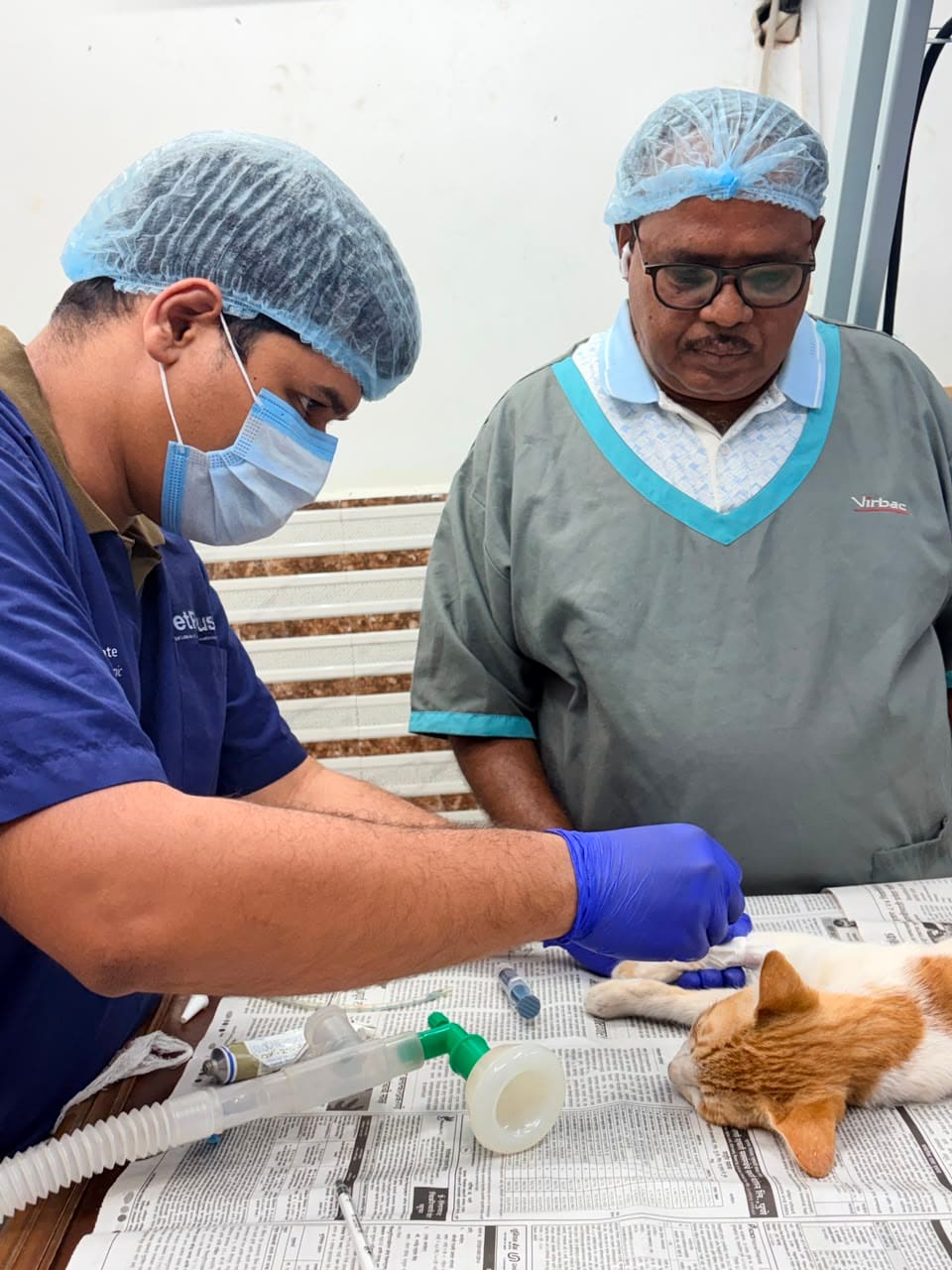
- Gaseous anaesthesia with monitoring. A cat's mouth can't be properly examined or cleaned awake.
- Charting each tooth and checking for resorption and pockets.
- Scaling and polishing, and extraction of painful or diseased teeth where needed.
- Pain relief to go home with, and soft food for a few days.
Cats eat remarkably well even with several teeth extracted. Most owners notice their cat becomes more playful and grooms better once the mouth is pain-free.
Prevention
- Brushing with cat toothpaste, starting slowly from kittenhood, is the most effective method.
- Dental diets and treats with proven plaque control can help.
- Yearly mouth checks at the annual vaccination visit, or every six months for cats with a history of dental problems.
Frequently Asked Questions
My cat still eats dry food. Can she really have a painful mouth?
Yes. Cats often swallow kibble without chewing. Eating is driven by survival, so continuing to eat doesn't mean there's no pain.
Will my cat manage after teeth are removed?
Yes. Cats adapt very well, even with many or all teeth removed, and can usually eat wet food and even small kibble.
Can calicivirus cause mouth problems?
Yes. Calicivirus causes mouth ulcers in kittens and is linked to stomatitis in adults. Tricat vaccination reduces the severity of disease.
Keep reading