

How Often Should Cats Be Dewormed?
Kittens every two weeks, adults usually every three months, and more often for hunters and balcony cats in contact with strays. The schedule we follow, which worms are common in Pune cats, and why fleas matter too.
· 3 min read
Updated
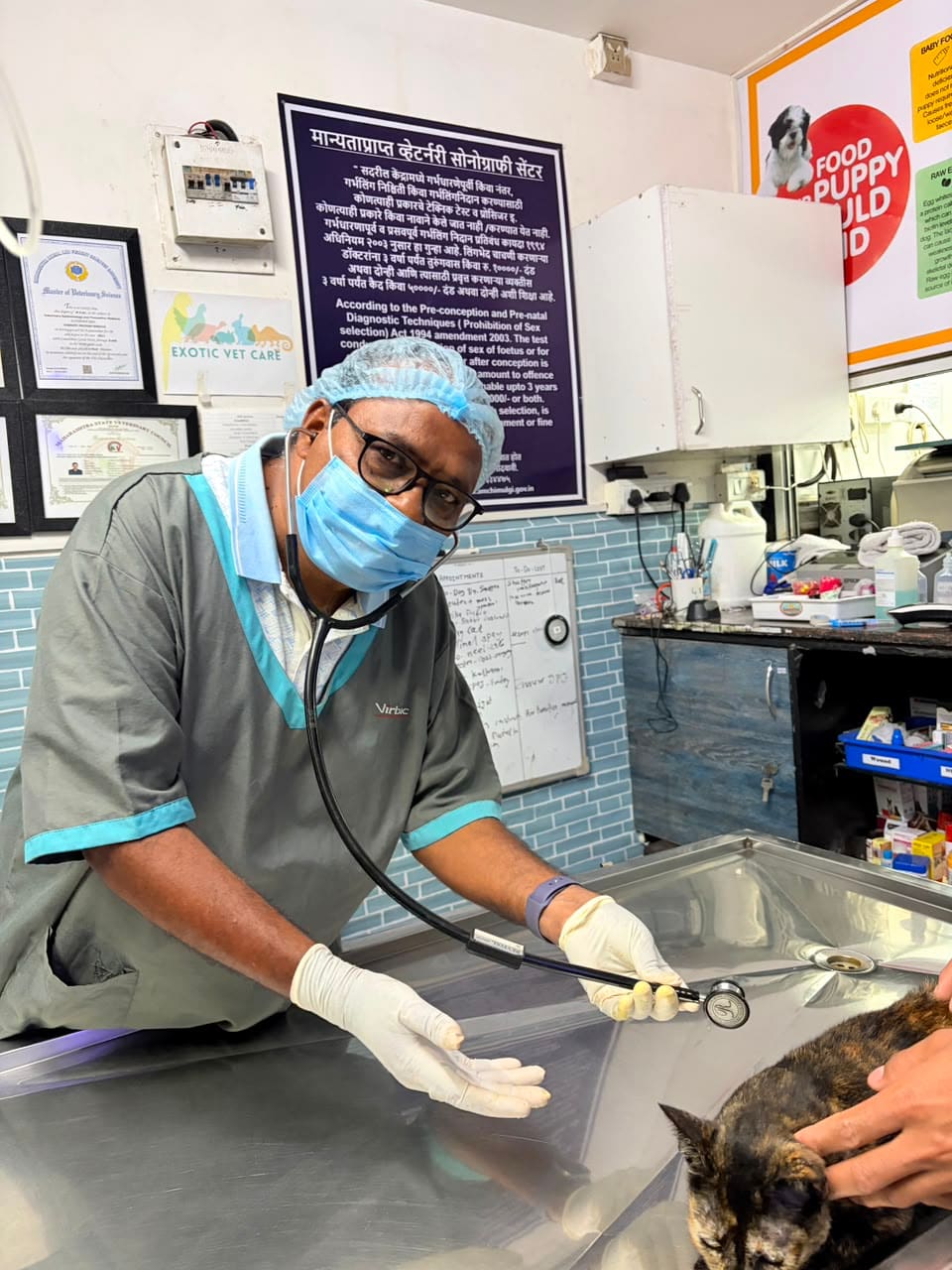
Even strictly indoor cats get worms. Eggs come into the house on shoes, in raw meat or fish, from fleas, and from mother cats to their kittens. Regular deworming protects your cat and the family, especially young children.
The schedule we follow
| Age / lifestyle | How often |
|---|---|
| Kittens, 2 weeks to 3 months | Every 2 weeks |
| Kittens, 3 to 6 months | Monthly |
| Adult cats | Every 3 months as a standard |
| Hunters, outdoor cats, cats fed raw meat or fish, cats in contact with strays or a society colony | We may advise more often |
| Pregnant and nursing queens | Only with a product and timing advised by a vet |
We adjust this for each cat after looking at lifestyle, faecal test results and any flea problem.
Worms common in Pune cats
- Roundworms (Toxocara cati): the most common in kittens. Passed through the mother's milk. Kittens develop a pot belly, poor growth, diarrhoea, and sometimes vomit spaghetti-like worms.
- Hookworms: feed on blood, so heavy infections cause anaemia in kittens.
- Tapeworms: spread by fleas (when a cat swallows a flea while grooming) and by eating rodents or lizards. You may see rice-grain-like segments near the tail or on bedding.
- Protozoa (coccidia, Giardia): not worms, and not killed by routine dewormers. Common in rescued kittens with ongoing diarrhoea, and diagnosed with a faecal test.
Why fleas and worms go together
If your cat has fleas, it will keep getting tapeworms, however often you deworm. Treat fleas on every pet in the house and in the home (bedding, sofa cushions, carpets), together with deworming.
Signs your cat may have worms
- Pot belly in a kitten, with thin limbs
- Diarrhoea, soft stool or mucus
- Vomiting worms, or worms or segments in the stool
- Dull coat, poor weight gain
- Scooting or licking around the tail
- Pale gums (hookworm anaemia)
Many adult cats with worms show no signs at all, which is why routine deworming matters.
Giving dewormers safely
- Dose by weight. Weigh your cat. Kittens grow quickly, so re-weigh at every dose.
- Use cat-specific products recommended by your vet. Some dog products are toxic to cats, especially spot-ons containing permethrin.
- Spot-on dewormers are available for cats who won't take tablets.
- If a kitten has many worms, it may pass them in the stool for a day or two after treatment. That's expected.
Protecting your family
Roundworm eggs can infect children who play in contaminated soil or sandpits. Scoop litter daily, wash hands after cleaning litter boxes, cover children's sandpits, and keep pet deworming up to date.
Frequently Asked Questions
My cat never goes outside. Does she still need deworming?
Yes, though perhaps less frequently. Indoor cats can still get worms through fleas, food and things brought into the home. We may combine routine deworming with an occasional faecal test.
Can I deworm my cat and vaccinate on the same day?
Ideally, deworm a few days to a week before vaccination, so the immune system responds better. We'll plan the timing with you.
My kitten still has diarrhoea after deworming. Why?
It may be coccidia or Giardia, a diet change, or an infection. Bring a fresh stool sample for testing.
Keep reading