

Cat Breathing Problems: Signs of Respiratory Distress
A cat breathing with its mouth open is an emergency, unlike a dog. How to count your cat's resting breathing rate, the causes from asthma to fluid around the lungs, and how to transport a breathless cat safely.
· 3 min read
Updated
Cats breathe quietly through the nose, and they rarely pant. That makes breathing changes in cats easy to miss early, and very serious once they're obvious.
Count your cat's resting breathing rate
This simple home check is useful, especially for cats with heart or lung disease.
- Wait until your cat is asleep or resting calmly, not just after play or in the heat.
- Count each time the chest rises over 30 seconds, then multiply by 2.
- A normal resting rate is roughly 20–30 breaths per minute. Consistently over 40 per minute at rest needs a vet visit, and a sudden rise is urgent.
Record it on your phone, because trends help us.
Common causes
Cat flu (upper respiratory infection). Sneezing, nasal discharge, noisy breathing through a blocked nose. Usually not life-threatening, but cats stop eating when they can't smell food.
Feline asthma. Coughing that looks like trying to bring up a hairball, with the neck stretched low, plus wheezing and episodes of fast breathing. Triggers include dust, cigarette smoke, incense and agarbatti, perfumed litter and aerosol sprays.
Fluid around the lungs (pleural effusion). Causes include heart disease, FIP, a lymphoma in the chest, and infection (pyothorax, often after a cat fight). These cats breathe fast and shallow, with an exaggerated belly movement.
Heart disease (hypertrophic cardiomyopathy). Often silent until the cat suddenly breathes fast. Some cats are first diagnosed during an emergency, or after sudden hind-leg paralysis from a clot.
Trauma. A fall from a balcony or window ("high-rise syndrome"), common in Pune's apartment towers, can cause lung bruising or air around the lungs, even when the cat looks fine at first.
Other causes: anaemia (the body breathes faster to get oxygen), pain, heatstroke, and foreign objects in the nose.
What we do at the clinic
A cat in distress may need oxygen first, examination second. Too much handling can tip it into crisis. Once it's stable:
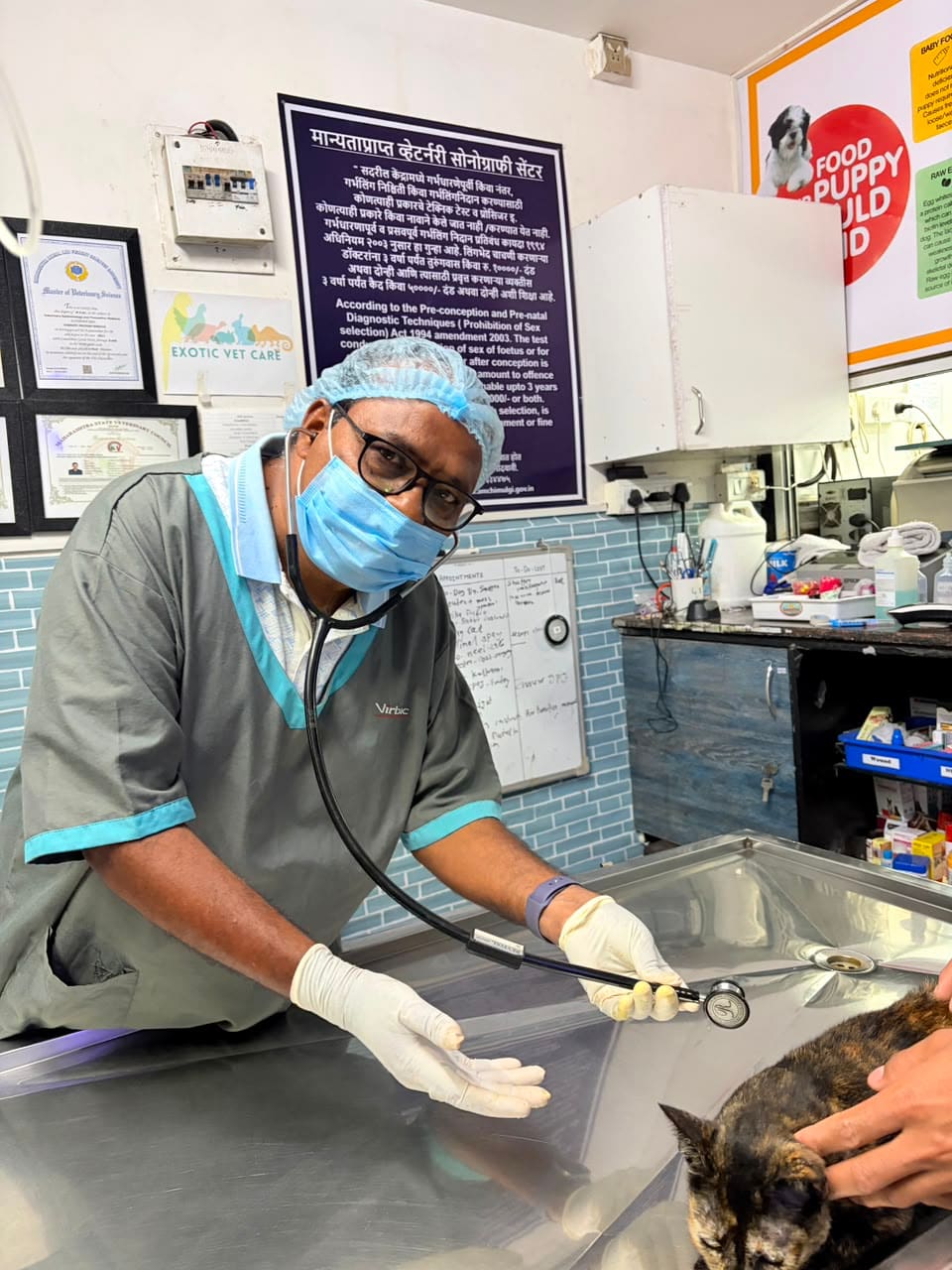
- Listening to the heart and lungs.
- Digital X-ray of the chest to look for fluid, heart enlargement, lung patterns or trauma.
- Draining fluid from the chest if present. This gives immediate relief and a sample to analyse.
- CBC and biochemistry in our in-house lab (about 15–20 minutes), and fluid analysis.
- Referral for a heart ultrasound (echocardiogram) when heart disease needs detailed assessment.
Transporting a breathless cat
- Use a carrier with a top opening if possible. Don't hold the cat on your lap in a moving vehicle.
- Keep the car cool and well ventilated. Don't cover the carrier completely.
- Drive calmly and call ahead so we're ready.
Frequently Asked Questions
My cat coughs. Is it a hairball?
Cats bringing up hairballs usually retch and produce something. Repeated coughing with nothing coming up, especially in a crouched position, is more likely asthma or another lung problem and should be checked.
Can incense or mosquito coils really affect my cat?
Yes. Smoke and fragrance are common asthma triggers. Use them away from your cat's rooms, or not at all.
My cat breathes fast in summer. Is that normal?
Cats should not pant like dogs. Fast breathing in the heat needs cooling and a check, because heart disease often shows itself in hot weather.
Keep reading