

What Blood Tests Does a Sick Cat Need?
Cats hide illness until it is advanced, so blood tests often find what the examination can't. The core panel for a sick cat, the extra tests for specific symptoms, and how stress affects cat results.
· 3 min read
Updated
Cats are experts at hiding illness. By the time a cat stops eating, hides under the bed or vomits repeatedly, the underlying problem is often well advanced. Blood tests show what is happening inside, and in cats they frequently change the diagnosis entirely.
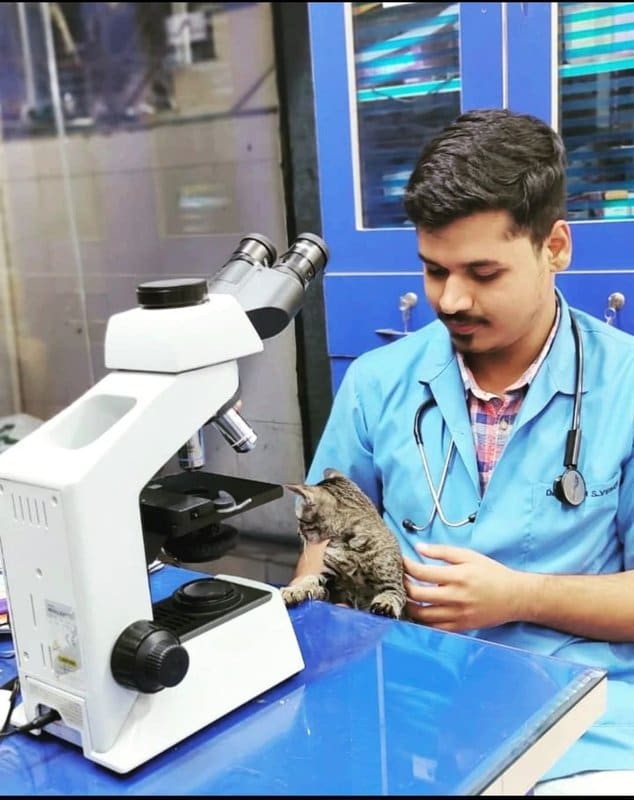
At Shivraj Pet Clinic & Lab, CBC and biochemistry are run in our in-house lab, with results in about 15–20 minutes, so a sick cat's treatment can start in the same visit.
The core panel for almost every sick cat
1. Complete blood count (CBC)
- Red cells: anaemia from chronic kidney disease, fleas in kittens, blood parasites (Mycoplasma haemofelis), or FeLV.
- White cells: very low counts in feline panleukopenia (a key finding in a vomiting, feverish kitten); high counts with infection, abscesses or pyothorax.
- Platelets: cat platelets clump easily in the tube, so a "low" count is always checked on a blood smear before we act on it.
2. Biochemistry
- Kidney values (urea, creatinine, phosphorus): chronic kidney disease is one of the most common illnesses in cats over 8–10 years.
- Liver values (ALT, ALP, bilirubin): in cats, even a modest rise in ALP matters. A cat that stopped eating several days ago, especially an overweight one, is at risk of hepatic lipidosis (fatty liver).
- Glucose: high in diabetes, but stress alone can push a cat's glucose high during a clinic visit. We interpret it with the urine result and, if needed, a fructosamine test.
- Total protein and globulin: very high globulin with fluid in the belly raises concern for FIP.
- Electrolytes: high potassium in a blocked male cat is life-threatening.
3. Urinalysis. For cats, urine is as important as blood. Urine concentration often shows kidney disease before creatinine rises, and sugar in the urine supports diabetes.
Extra tests, by symptom
| Situation | Additional tests we may suggest |
|---|---|
| Vomiting, diarrhoea in a kitten | Panleukopenia rapid test, faecal exam |
| Cat older than 8 with weight loss and a big appetite | Total T4 (hyperthyroidism, sent to an external lab) |
| Fever that won't settle, unexplained weight loss | FeLV/FIV rapid test |
| Yellow gums or skin | Bilirubin, liver panel, blood smear for parasites |
| Fluid in the belly or chest | Fluid analysis, protein levels (FIP workup) |
| Before anaesthesia | CBC and kidney and liver values |
Getting reliable results from a nervous cat
- Use a proper carrier, covered with a towel. Spray a cloth with something that smells of home.
- Fast for about 8 hours before routine tests (water is fine). Don't fast a cat that is already not eating, a diabetic cat or a kitten.
- Keep the visit calm. Stress raises glucose and can change the white cell count, so we handle cats quietly and away from barking dogs where possible.
- Bring urine if you can. A clean litter box with non-absorbent litter (or clean aquarium gravel) can let you collect a sample at home. Bring it within 1–2 hours.
Frequently Asked Questions
My cat looks fine apart from not eating. Are tests really needed?
In cats, often yes. Loss of appetite is one of the few signs cats show, and it can be the only clue to kidney disease, fatty liver, pancreatitis or a dental problem. A cat that hasn't eaten for 24 hours should be examined.
How much blood do you take?
A small amount, usually from a neck or leg vein. Most cats tolerate it well with gentle handling.
How often should an older cat have blood tests?
Once a year from about 7–8 years, and every 6 months from about 11–12 years or if there is a known condition.
Keep reading