

Bird First Aid: What to Do Before You Reach an Avian Vet
Warmth, quiet, darkness and a short journey save more birds than any home remedy. Step-by-step first aid for bleeding feathers, cat or dog bites, fan injuries, burns and a bird found on the cage floor.
· 4 min read
Updated
For a sick or injured bird, the hours before you reach a vet matter a great deal. Most of what helps is simple: warmth, quiet, low light and careful transport. Most of what harms comes from well-meant home remedies. This guide covers the situations we see most often in Pune homes.
The basics for any sick bird
- Warmth. Sick birds lose body heat fast. Aim for about 28–30 °C. Use a room heater at a safe distance, or a hot-water bottle wrapped in a towel outside one side of a small carrier, so the bird can move away if it gets too warm. Panting or wings held away from the body mean it is too hot.
- Quiet and dim light. Partly cover the carrier with a light cloth. Keep children, cats and dogs out of the room.
- A small carrier, low or no perch. A weak bird falls from high perches and injures itself further.
- Don't force food or water into the beak. Birds inhale liquid easily. Offer a shallow dish of water and familiar soft food within reach.
- Call us before setting out, so we can prepare.
Bleeding from a broken "blood feather"
Growing feathers (pin feathers) have a blood supply. If one breaks, it can bleed a lot for a small bird.
- Apply gentle, firm pressure with clean gauze or cotton for a few minutes.
- Styptic powder or plain cornflour pressed onto the bleeding point helps it clot. Don't use styptic on skin wounds, only on feathers, beaks and nails.
- If bleeding restarts, the feather may need to be removed. That should be done by us, not at home, because pulling it the wrong way can damage the follicle.
- A bleeding nail clipped too short: apply pressure and styptic or cornflour.
A budgie weighs about 30–40 g. Even a few drops of blood matter. If bleeding does not stop in 5 minutes, come in immediately.
Cat or dog bites and scratches
Any contact between a cat's mouth or claws and a bird is an emergency, even if you can't see a wound. Cat saliva carries bacteria (especially Pasteurella) that can kill a bird within 24–48 hours. Birds need antibiotics started quickly. Don't wait for signs.
Ceiling fan injuries
Very common in Indian homes where birds are let out to fly. Turn off all fans before letting a bird out, every time. If a bird hits a fan:
- Keep it warm and still in a carrier.
- Check for bleeding and for a drooping wing.
- Come in. Head injuries and internal bleeding may not be visible.
Burns and hot liquids
Birds landing on stoves, in hot tea or near cooking pots: cool the area with room-temperature water (not ice) for a few minutes, then come in. Don't apply ghee, oil, toothpaste or creams.
A bird found fluffed up on the cage floor
This is one of the most serious signs in birds. Follow the basics above (warmth, quiet, low perches) and bring it in the same day. Note when it last ate and what the droppings look like, and bring a fresh dropping.
Suspected poisoning or fumes
Move the bird to fresh air immediately. Open windows and switch off any non-stick pan on the stove, mosquito vaporisers, agarbatti or sprays. Bring the packaging of anything it may have eaten.
Egg binding (a female straining)
Signs: sitting on the cage floor, tail bobbing, straining, a swollen vent, or a leg weakness. Raise the warmth and humidity (a warm, damp towel near, not touching, the carrier) and come in the same day. Don't try to remove the egg yourself. It can break inside her.
A simple bird first-aid box
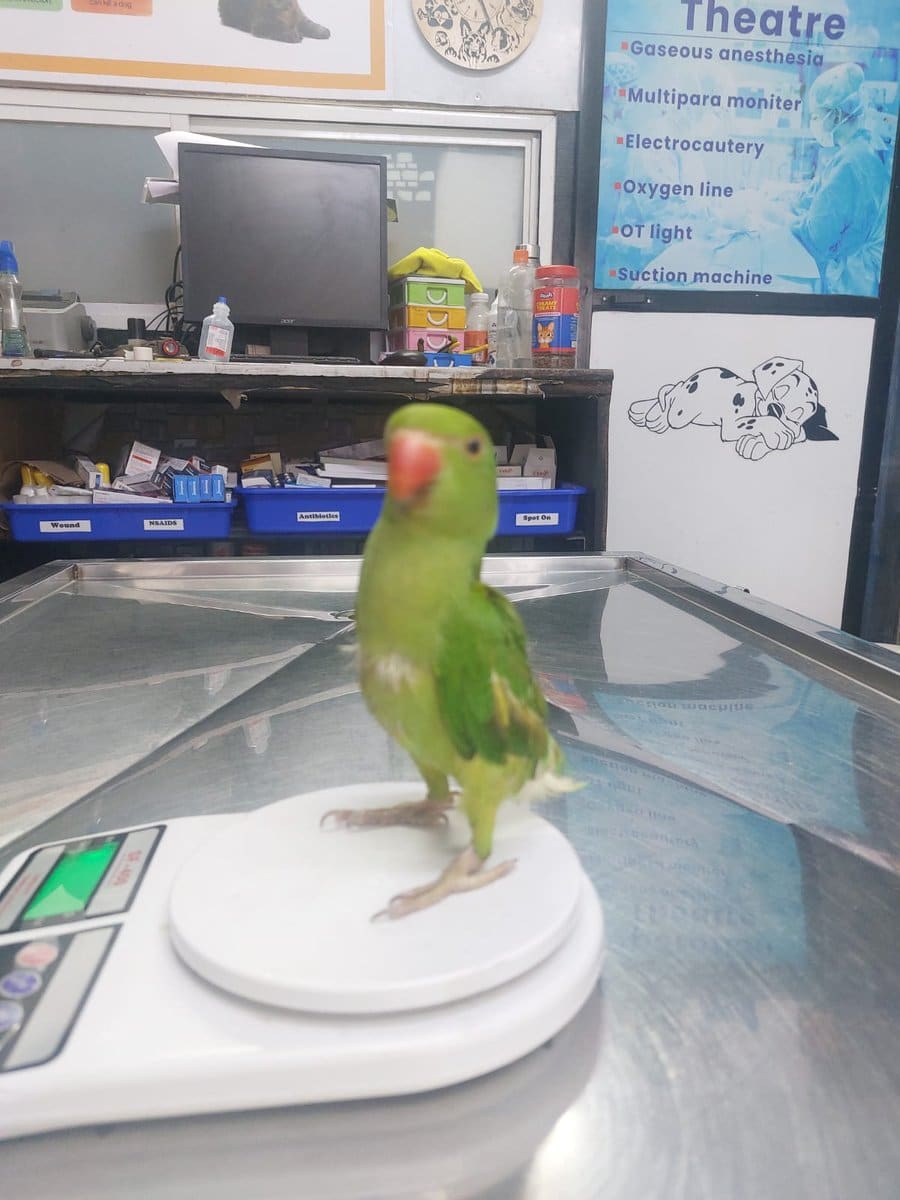
Clean gauze and cotton, styptic powder or cornflour, a small towel for gentle restraint, a small travel carrier, a hot-water bottle, a gram kitchen scale (to track weight), and the clinic number saved in your phone.
Frequently Asked Questions
Can I give my bird turmeric or honey for an infection?
Please don't rely on home remedies. They delay real treatment, and birds deteriorate fast.
How do I hold a bird safely?
Wrap it loosely in a small towel, supporting the body. Never squeeze the chest. Birds have no diaphragm, so pressure on the chest stops them breathing.
Keep reading