

Changes in Bird Droppings: What They Tell You About Your Parrot's Health
Droppings are the best daily health check you have for a pet bird. How to read the three parts, which colour changes are harmless after fruit, and which mean liver disease, bleeding or infection.
· 3 min read
Updated
Birds hide illness, but they cannot hide their droppings. Looking at the cage paper every morning is the single most useful health habit for any bird owner. It takes ten seconds and often shows a problem days before the bird looks unwell.
Tip: line the cage floor with plain white paper (newspaper hides colour changes) and change it daily, so you are always looking at the last 24 hours.
The three parts of a normal dropping
- Faeces: the solid, coiled or tubular part. Green to brown in seed- and pellet-eating birds, varying with diet.
- Urates: the white, creamy part. This is the bird's version of urine waste and should be white or off-white.
- Urine: a small amount of clear liquid around it.
Changes in each part mean different things, so look at them separately.
What changes can mean
| What you see | Possible meaning |
|---|---|
| Yellow or lime-green urates | Liver problem (psittacosis, fatty liver, toxins). Needs a vet visit. |
| Brown or red urates | Bleeding, kidney damage or lead/zinc poisoning. Urgent. |
| Black, tarry faeces | Bleeding high in the gut. Urgent. |
| Fresh red blood | Bleeding from the cloaca, an egg-laying problem or a tumour. Urgent. |
| Undigested seeds in the faeces | Poor digestion: proventricular disease, infection or parasites. |
| Very watery droppings (much more liquid) | Increased urination: kidney disease, diabetes, stress, or simply lots of fruit and vegetables. |
| Fewer, smaller droppings | The bird is eating less, often the first sign of illness. |
| Very large, smelly droppings | Possible egg-laying in females (they hold droppings overnight), or digestive infection. |
| Pasted feathers around the vent | Diarrhoea, infection, or an egg problem. |
Harmless changes
- Colour from food: beetroot, berries, jamun, papaya, pomegranate and coloured pellets change dropping colour for a day. If it matches what was eaten and the bird is bright, there is no need to worry.
- More water after fruit or after a bath.
- A single odd dropping after a fright (stress causes temporary watery droppings).
If you are unsure whether it's food, remove that food for 24 hours and see if the colour returns to normal.
When to come in
Book a visit if any change lasts more than 24 hours, or comes with fluffing up, sleeping more, eating less or weight loss. Come in the same day for blood (red or black), green-yellow urates with a quiet bird, or a female straining.
Bring a fresh dropping sample wrapped in cling film, or a photo of the cage paper, plus a photo of what the bird eats.
What we may do
- Faecal microscopy and a Gram stain for parasites, yeast and bacterial imbalance, examined in our lab during the visit.
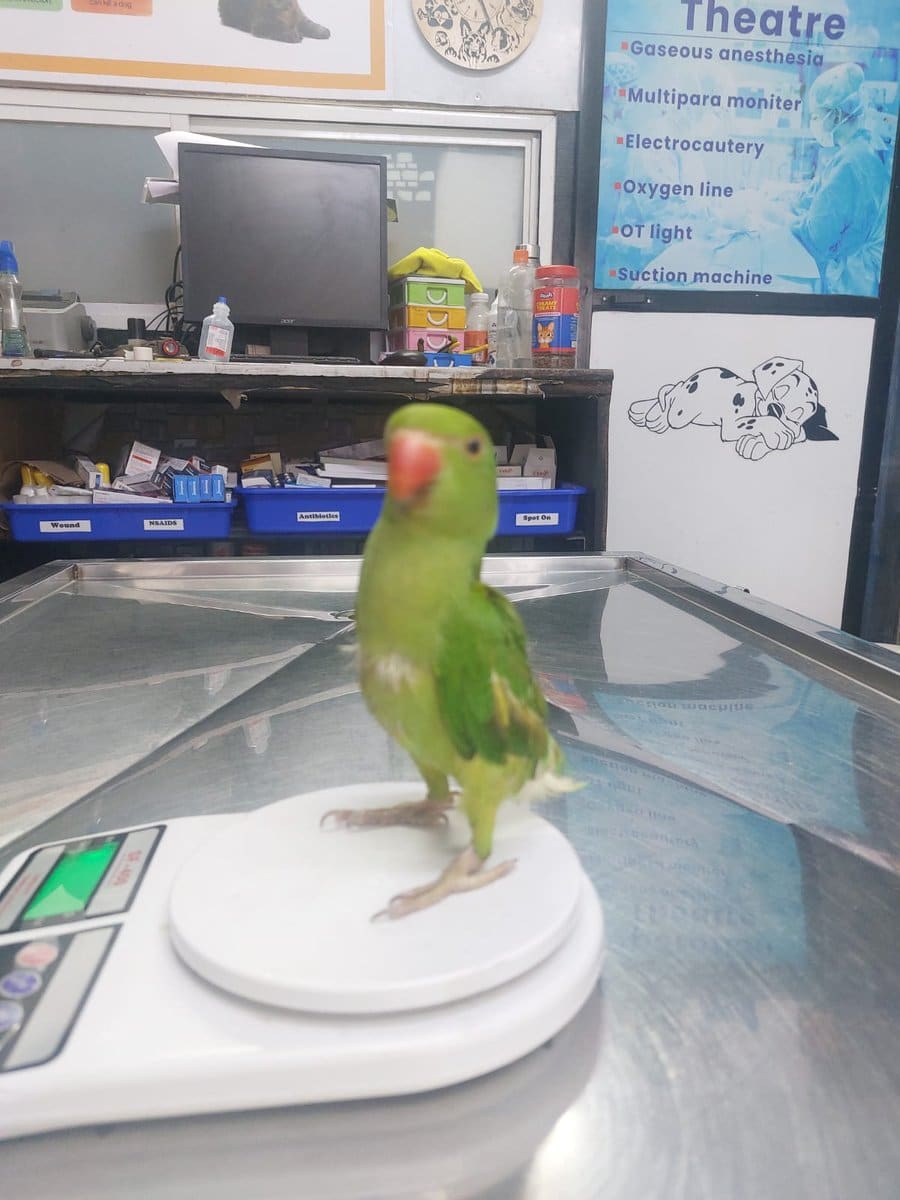
- Weighing on a gram scale. Weight loss is a key early sign in birds.
- Blood tests where safe, to check the liver and kidneys.
- X-ray if we suspect an egg, metal ingestion (old cage paint, toys with lead or zinc) or an enlarged organ.
Frequently Asked Questions
My budgie's droppings are mostly water today. Is that diarrhoea?
Usually it's extra urine, not diarrhoea. Check if the faecal part is still formed. If it continues for more than a day, or the bird seems quiet, come in.
How many droppings a day are normal?
Small birds like budgies produce 25–50 droppings a day. Larger parrots produce fewer, larger ones. What matters most is a change from your bird's normal.
Can I tell psittacosis from the droppings?
Not reliably. Lime-green urates can suggest it, but testing is needed. Since psittacosis can infect people, mention any illness in the household.
Keep reading