

Pet Diagnostics in Pune: Which Tests Your Pet Might Need and Why
Blood count, biochemistry, urine, cytology, X-ray, ultrasound. What each test actually answers, which ones we run in-house during your visit, and which samples go to outside labs.
· 3 min read
Updated
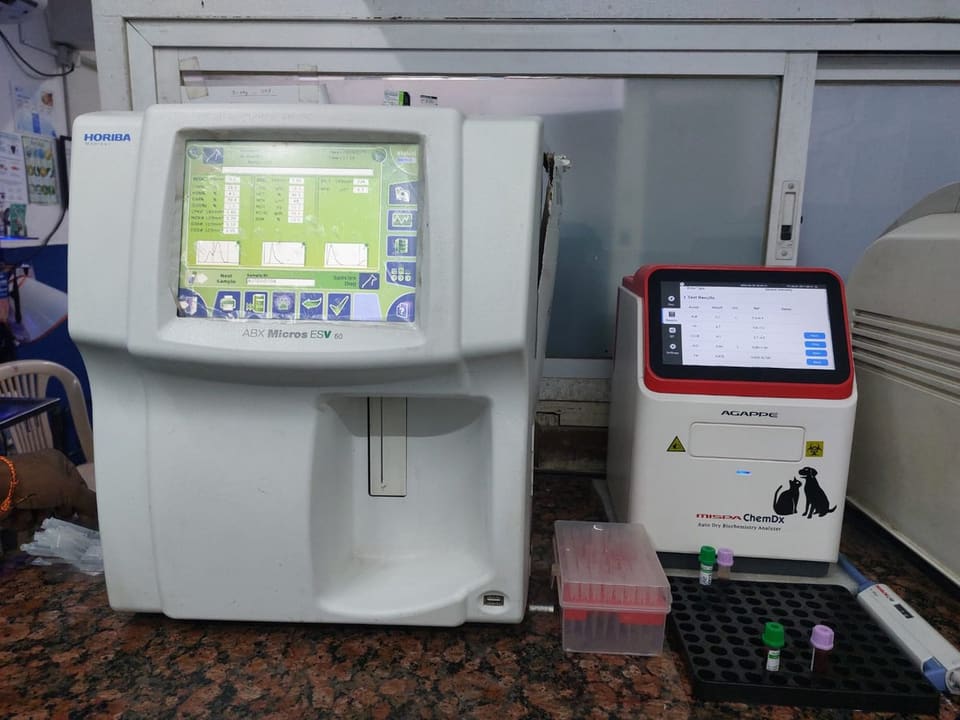
"Let's do some tests" can sound vague and expensive. In practice, each test answers a specific question, and a good vet only orders the ones whose answer would change what happens next. This guide explains the common tests in plain language, and is clear about which ones we run in our own lab at Shivraj Pet Clinic & Lab and which ones we send out.
The question each test answers
| Test | What it answers | Where it is done |
|---|---|---|
| CBC (complete blood count) | Is there anaemia, infection, inflammation, or a platelet problem (for example from tick fever)? | In-house, about 15–20 minutes |
| Biochemistry | How are the liver and kidneys working? What are the blood sugar, protein and electrolyte levels? | In-house, about 15–20 minutes |
| Urinalysis | Is there a urinary infection, crystals, sugar, or early kidney change? | In-house |
| Faecal exam | Are there worms, coccidia or Giardia? | In-house microscope |
| Skin scraping / ear cytology | Mites, yeast, bacteria? | In-house microscope |
| Fine-needle aspirate (FNA) | What kind of cells is this lump made of? | In-house first look; sent out when a pathologist report is needed |
| Digital X-ray | Bones, chest, swallowed objects, bladder stones, the size and shape of organs | In-house, images in seconds |
| Ultrasound (sonography) | Internal soft tissue in real time, pregnancy confirmation | In-house |
| Histopathology (biopsy) | Exact diagnosis of a removed tumour or tissue | Sent to an external lab |
| PCR / culture / hormone tests | Specific infections, which antibiotic will work, thyroid or adrenal disease | Sent to an external lab |
| CT / MRI | Brain, spine, complex orthopaedic or cancer staging | Referral centre; we coordinate |
Why in-house matters for a sick pet
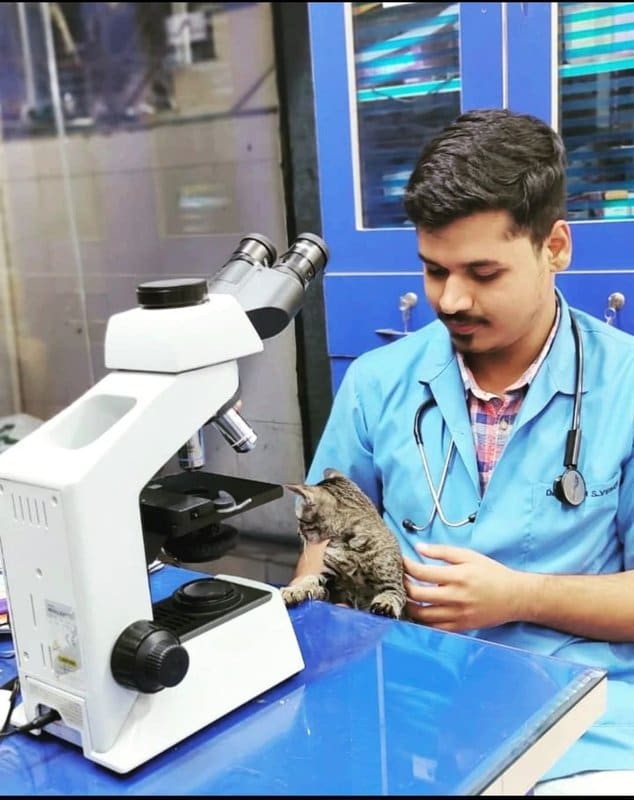
Our founder, Dr. Shivaji B. Vidhate, holds an M.V.Sc. in Veterinary Pathology, and the lab has always been central to how this clinic works. When CBC and biochemistry results come back during the consultation, the treatment plan is based on numbers, not guesses.
Take a dog with a fever and no appetite. If platelets are very low, we think of tick fever. If the white cell count is very high, we look for a source of infection, such as the uterus in an unspayed female. If the kidney values are raised, fluids become urgent. Each answer leads to a different first treatment, and you get it in the same visit, not the next day.
Common test combinations
- A sick dog or cat with fever or vomiting: CBC + biochemistry, and often a rapid test for parvovirus or panleukopenia in young animals.
- Before anaesthesia: CBC + kidney and liver values. Older pets may also need a chest X-ray.
- Increased thirst and urination: biochemistry + urinalysis, to separate diabetes, kidney disease and other causes.
- A lump: fine-needle aspirate first. If it is removed, histopathology.
- Limping or a suspected swallowed object: X-ray.
- Senior wellness (7+ years): CBC, biochemistry and urinalysis once a year, to catch kidney and liver changes early.
How to prepare
- Fasting: for biochemistry, keep your pet off food for about 8–12 hours (water is fine) unless we tell you otherwise. Don't fast puppies, kittens, diabetic pets or small exotic pets. Ask us first.
- Urine: a fresh morning sample in a clean, dry container is best. Bring it within an hour or two.
- Stool: a fresh, thumb-sized sample in a sealed container.
- Previous reports: bring them. Trends over time are often more useful than a single result.
Frequently Asked Questions
Do you do tests for birds, rabbits and turtles too?
Yes. Blood tests and X-rays are adapted for small exotic patients. Blood volumes are tiny in small birds, so we choose tests carefully.
Can I get a printout of the results?
Yes. You will get a copy of the in-house results to keep for your records.
What does testing cost?
Consultation is ₹300 (₹400 for exotic pets). We explain which tests we recommend, and why, before running them, so there are no surprises.
Keep reading